
Sulforaphane for Gastritis & H. Pylori: What the Research Actually Shows
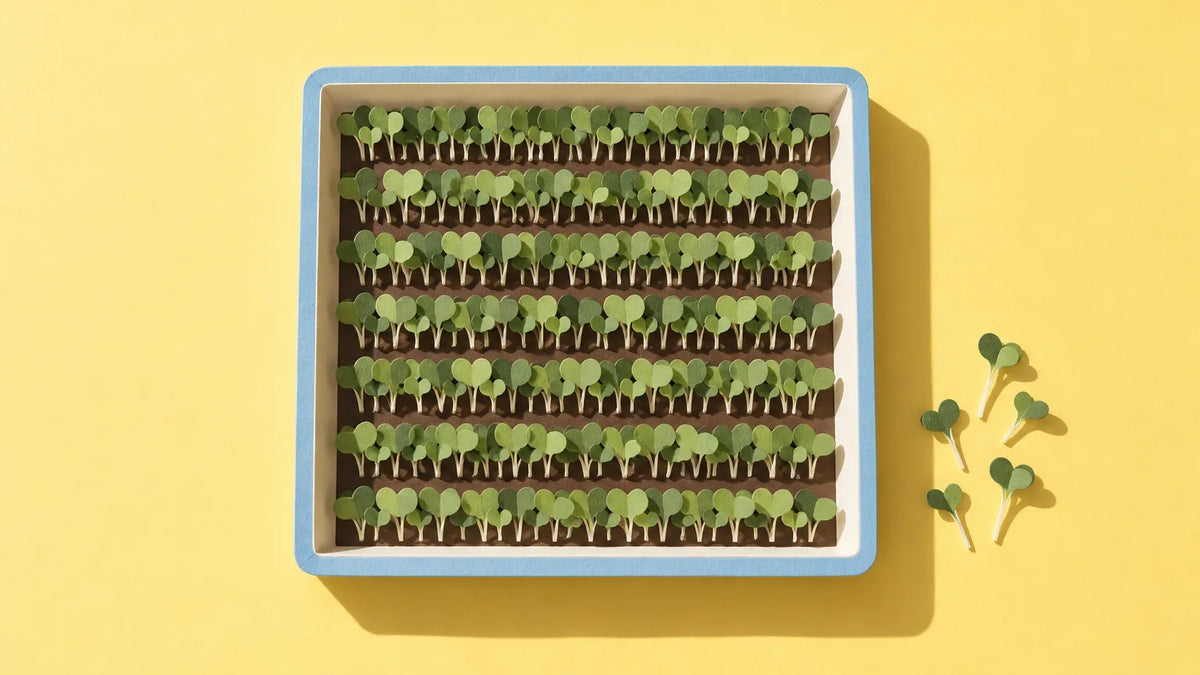
In an 8-week trial in 48 people with H. pylori, daily broccoli sprouts, but not alfalfa sprouts, lowered markers of H. pylori colonization and of gastric inflammation. In infected mice, the effect depended on Nrf2, the pathway sulforaphane works through.
If your stomach still burns, aches, or feels raw after meals — even after a clear H. pylori test — you are not imagining it, and you are not alone. The most overlooked fact in gut health is this: killing the bacteria is not the same as healing the stomach. Antibiotics end the infection, but they leave behind an inflamed, depleted lining that often takes far longer to recover than anyone tells you.
This article breaks down what human research actually shows about sulforaphane — a compound from broccoli sprouts — and why it has become one of the most studied natural approaches to gastric inflammation and stomach lining support.
What is gastritis? Gastritis is a broad term used for different conditions of the stomach lining, and infection with H. pylori is its main cause1. What gastritis is and what causes it.
What causes gastritis? A review lists H. pylori, NSAIDs, stomach acid, excessive autoimmune reactions and chronic mental stress as stressors that generate free radicals in digestive tissue and can lead to chronic inflammation2. Details.
Have broccoli sprouts been tested for gastritis? Yes, in people with H. pylori infection. In 48 H. pylori-infected patients, 8 weeks of daily broccoli sprouts, but not alfalfa sprouts, lowered serum pepsinogens I and II, markers of gastric inflammation3. The human research.
How does sulforaphane act in the stomach? Through the Nrf2 pathway. In H. pylori-infected mice, sprouts reduced gastric inflammation, and this was not seen in mice with the nrf2 gene deleted3. The human research.
Why does myrosinase matter in a sulforaphane supplement? Sulforaphane forms when glucoraphanin meets myrosinase. In human volunteers, sulforaphane from broccoli sprouts or seeds with their own myrosinase active was 3- to 4-fold more bioavailable than from glucoraphanin given without active plant myrosinase4. The catch with most supplements.
What is gastritis, and what causes it?
Gastritis is a broad term that clinicians, endoscopists and pathologists use for different conditions. Diagnosing and classifying it needs a look at the gastric mucosa, the stomach lining, under the microscope. The main cause is infection with H. pylori1.
H. pylori is not the only strain on the lining. A review of the digestive tract lists H. pylori, NSAIDs (non-steroidal anti-inflammatory drugs), gastric acid, excessive autoimmune reactions and chronic mental stress among the stressors that generate free radicals inside digestive tissue and can lead to chronic inflammatory disease2. The same review reports that sulforaphane-rich broccoli sprouts, which switch on the Nrf2 antioxidant system, eased gastric inflammation caused by H. pylori2.

Why your stomach still hurts after H. pylori is “gone”
H. pylori damages the protective mucus layer and the cells of your stomach lining. A round of antibiotics can clear the bacteria, but it does nothing to rebuild that barrier. Meanwhile, the antibiotics themselves often disrupt the wider gut environment. The result is a stomach that tests negative but still feels broken — burning after meals, bloating, nausea, and that gnawing discomfort that never fully settles.
This is the recovery gap most people fall into. The infection is treated; the lining is left to fend for itself.
What sulforaphane does differently
Sulforaphane works through a pathway called Nrf2 — often described as the body's master switch for its own antioxidant and anti-inflammatory defenses. Rather than attacking a symptom, it helps activate the stomach's own protective machinery.
What makes this compound notable is that the evidence isn't just theoretical. It has been tested in people.
From Sproutly
The human research
In a randomized controlled trial from researchers at Johns Hopkins, H. pylori-infected participants consumed broccoli sprouts daily for eight weeks. Those eating the sprouts — but not the placebo group — showed measurable decreases in markers of both H. pylori colonization and gastric inflammation.3 Notably, the markers crept back toward baseline two months after they stopped, underlining that this is a consistency-driven, daily-support approach rather than a one-time cure.
In supporting mouse studies, sulforaphane-rich broccoli sprouts reduced bacterial colonization and calmed inflammatory markers in the stomach — and the protective effect disappeared in animals with the Nrf2 gene switched off, pointing directly to that pathway as the mechanism.3
In plain terms: the research suggests sulforaphane may help quiet gastric inflammation and support the lining, working with your body's own defenses rather than against the bacteria alone.
The catch with most supplements
Here's what almost no one shopping for sulforaphane realizes. The compound isn't ready-made in the plant — it's created when a precursor called glucoraphanin meets an enzyme called myrosinase.4 Most supplements contain only glucoraphanin, because manufacturing heat destroys the enzyme. They quietly rely on your gut bacteria to finish the job, which research shows is unreliable from person to person. No enzyme, no meaningful sulforaphane.
This is exactly the gap Sproutly was built to close — by delivering the enzyme directly instead of leaving conversion to chance.
How Sproutly is formulated
- Broccoli Seed Extract (13% glucoraphanin) — the stable precursor
- Broccoli Sprout Extract with active myrosinase — the conversion enzyme, delivered directly
- Mustard Seed Extract — a natural backup source of myrosinase
- Vitamin C — supports the conversion environment
Together they're designed to produce real sulforaphane — up to 30mg per serving — fresh in the body, gently, without the harsh ingredients that aggravate an already irritated stomach.
What to expect
Sulforaphane supports your body gradually. Most people take it daily for several weeks before noticing changes, and the research itself was built on eight weeks of consistent use. Think of it as a daily habit for stomach lining support, not an overnight fix. It is not a replacement for medical care — if you have an active infection or severe symptoms, work with your doctor.
Frequently asked questions
Can sulforaphane help with H. pylori?
Human research has shown that sulforaphane-rich broccoli sprouts, eaten daily for eight weeks, reduced markers of H. pylori colonization and gastric inflammation compared to placebo. It works by supporting the body's Nrf2 antioxidant pathway. It is best viewed as daily support alongside, not instead of, medical treatment.
Why does my stomach still burn after H. pylori treatment?
Antibiotics clear the bacteria but don't repair the damaged stomach lining or restore the gut environment. That recovery gap is why discomfort often continues after a negative test. Supporting the lining's natural repair process is the missing step.
Does sulforaphane help with gastritis?
Sulforaphane activates the Nrf2 pathway, which supports the body's own anti-inflammatory and protective defenses in the stomach lining. Research in people with H. pylori-related gastritis showed reduced inflammation markers with daily broccoli sprout intake.
What's the best way to take sulforaphane for gut health?
Choose a supplement that includes an active myrosinase enzyme source so conversion is reliable, and take it consistently every day for several weeks. Sproutly combines broccoli seed extract, broccoli sprout extract with active myrosinase, and mustard seed extract for up to 30mg of sulforaphane per serving.
References
- den Hollander WJ, Kuipers EJ. Current pharmacotherapy options for gastritis. Expert Opin Pharmacother. 2012;13(18):2625-36. PMID 23167300
- Yanaka A. Contribution of NRF2 in gastrointestinal protection from oxidative injury. Curr Pharm Des. 2018;24(18):2023-2033. PMID 29788877
- Yanaka A, Fahey JW, Fukumoto A, et al. Dietary sulforaphane-rich broccoli sprouts reduce colonization and attenuate gastritis in Helicobacter pylori-infected mice and humans. Cancer Prev Res (Phila). 2009;2(4):353-60. PMID 19349290
- Fahey JW, Holtzclaw WD, Wehage SL, et al. Sulforaphane bioavailability from glucoraphanin-rich broccoli: control by active endogenous myrosinase. PLoS One. 2015;10(11):e0140963. PMID 26524341
What customers say
About this article
Written by the Sproutly editorial team. Sproutly sells a broccoli sprout extract supplement, and this article links to its product page.
This is general information, not medical advice. Check your own label and ask a pharmacist or doctor about your situation.
These statements have not been evaluated by the Food and Drug Administration. This product is not intended to diagnose, treat, cure, or prevent any disease.
Keep reading
 Gut health
Pumpkin Spice Latte Stomach Ache: What's in the Cup and Why It Hurts
 Gut health
After H. pylori Treatment, and the Burn Is Still There
 Gut health